
Cloud Migration. The Complete Guide to Success
Published by OpsAnalytics
Reading time: 10 minutes
Why Do 7 Out of 10 Companies Fail in Their Cloud Migration?
In this article we show you the answer
 In Latin America, the reality of cloud migration reflects a significant challenge.
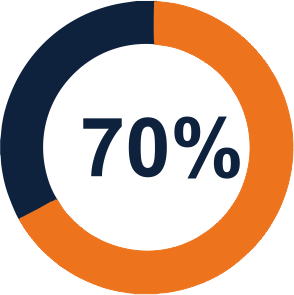 70% of migrations do not achieve the anticipated benefits. Surprisingly, this is not due to technology, budget, or talent shortages.
Myths vs. Reality
| Myths | Reality |
|---|---|
| “Lack of technology” | Wrong strategy Major platforms like AWS, Azure, and OCI are widely accessible |
| “Lack of budget” | Wrong approach Companies are investing millions |
| “Lack of talent” | Change management Skilled professionals available in the market |
 The root cause? An absence of a
well-defined, effective strategy
Below we show you the 5 main reasons companies fail when trying to migrate to the cloud
.
Top 5 Reasons for Migration Failure 

The “Big Bang” Approach
Attempting to migrate everything simultaneously often causes operational chaos and unnecessary risks.

Underestimating System Dependencies
Applications that appear standalone may be connected to numerous other systems. Without proper mapping, hidden dependencies result in costly surprises.

Ignoring the Human Factor
Technology accounts for only about 30% of migration success; the remaining 70% depends on change management, user training, and organizational culture.

Neglecting Post-Migration Optimization
El “lift & shift” (mover tal como está) debería ser temporal, pero muchas empresas se quedan ahí permanentemente, perdiendo los beneficios reales de la nube.

Overlooking FinOps and Cost Governance
Without diligent cost control, cloud bills can escalate—some cases have seen 300% cost increases post-migration.
The 6 Types of Cloud Migration
Which One Fits Your Business?

Rehost (Lift and Shift)
Definition
Moving applications “as-is” without modification.
Best For
- Critical systems requiring continuous uptime
- Tight regulatory or compliance deadlines
- An initial phase in a broader migration plan
Pros:
- Rapid execution (2–4 weeks per application)
- Low risk
- Does not require specialized cloud expertise
Cons:
- Limited cloud benefits realized
- Potential for initial cost increases
- Possible performance degradation
Expected ROI: 10-15% cost savings in the first year.
Caso study: A bank migrated its 15-year-old core banking using rehost.
Results: 6 weeks, zero downtime, and a solid foundation for further optimizations.
Rapid execution: 2-4 weeks
ROI: 10-15% save
Ideal for: Critical systems

Replatform (Lift, Tinker, and Shift)
Definition
Migrate with minor cloud optimizations while retaining core architecture.
Best For
- Modular applications suited for incremental enhancements
- Databases optimized via managed cloud services
- Seeking quick wins without full refactoring
Typical Steps:
- Assess optimization opportunities
- Migrate databases with tools like OCI Database Migration
- Tune applications (connections, queries, caching)
- Validate through testing
Expected ROI: 20-30% cost reduction plus performance gains.
Caso study: An insurance company migrated 12 Oracle databases to OCI Autonomous Database.
Results: -35% costs, +40% performance, -80% administrative overhead.
ROI: 20-30% save
Performance: +40%
Ideal for: Databases

Refactor (Re-architect for Cloud)
Definition
Redesign applications to fully leverage cloud-native features.
Best For
- Monolithic systems needing scalability and resilience
- Applications with high availability requirements
- When justified by business value and investment
Transformación típica:
Monolito → Microservicios + Containers + API Gateway
Transformation Pattern:
Monolith → Microservices + Containers + API Gateway
Key Technologies
- Kubernetes for orchestration
- API Gateway for inter-service communication
- Service Mesh for networking
- Serverless functions
Expected ROI: 40-60% cost savings and up to 10x agility improvement.
Case study: An e-commerce refactored its monolithic platform.
18 months later: 55% less infrastructure costs, 20x more deployment frequency,
perfect auto-scaling for Black Friday
.
.
ROI: 40-60% save
Agility: 10x plus
Ideal for: Monolithic systems

Repurchase (Replace with SaaS)
Definition
Replace custom apps with commercial SaaS solutions.
Best For
- Software not critical for competitive advantage
- Applications with high maintenance overhead
- When mature SaaS alternatives exist
Examples:
- On-prem ERP → Oracle Cloud ERP
- Email Servers → Office 365
- Custom CRM → Salesforce
Expected ROI: Significant maintenance cost reductions.
Case study: An insurance company migrated 12 Oracle databases to OCI Autonomous Database.
Results: -35% costs, +40% performance, -80% administrative overhead.
ROI: < maintenance cost
Implementation: 1-3 months
Ideal for: ERP, CRM

Remove (Decommission)
Definition
Eliminate unused, duplicate, or legacy applications.
Best For
- Apps with less than 5% utilization
- Overlapping functionality across systems
- Legacy solutions with no business value
Advantages
- Immediate reduction in licensing and infrastructure costs
- Simplification of the technology landscape
- Reduced operational complexity
- Frees up resources for strategic initiatives
Expected ROI: 100% 100% savings in associated costs + reduction of technical debt.
Case study: A multinational retailer saved $180,000 annually by decommissioning 23.
ROI: 100% costs eliminated
Results: Landscape simple
Ideal for: Apps with <5% usage

Retain (Keep On-Premises)
Definition
Maintain certain systems on-premises for strategic reasons.
Best For
- Data residency or regulatory mandates
- Technical dependencies that prevent migration
- Apps requiring ultra-low latency
- Systems planned for future replacement
Advantages
- Guaranteed regulatory compliance
- Immediate operational stability
- No performance risk due to latency
- Ideal as a temporary strategy
Expected ROI: Avoid unnecessary migration costs + comply with compliance.
Case study: Financial institution maintained on-premise core system due to regulation.
Results: $500,000 in avoided migration costs + regulatory compliance
100% guaranteed.
.
ROI: Avoid unnecessary costs
Advantage: Ensures regulation
Ideal for: Regulations
Success Story 
E-Commerce Transformation
Challenge
An 8-year-old PHP monolithic platform suffered:
- 4 hours downtime every Black Friday
- Poor mobile performance and high cart abandonment
- Fixed capacity infrastructure with high costs
- Lengthy 6-month release cycles and risky deployments
Black Friday 2023 downtime resulted in a $800K loss
Transformation Over 18 Months
Phase 1 (1-4 Months): E-commerce Plataform
- Frontend: React-based SPA frontend with server-side rendering
- Backend: Node.js microservices
- Database: OCI Autonomous Database + Redis
- CDN: OCI Content Delivery Network

Phase 2 (5-10 Months): Avanced Features
- Machine learning recommendation engine
- Real-time inventory
- Multi-payment processing
- Mobile app with offline support

Phase 3 (11-18 Months): Analytics & Optimization
- Behavioral data lake
- A/B testing platform
- Dynamic UI customization
- Supply chain integration

Outcome (Black Friday 2024)
- Availability: 100% uptime during peak 72 hours
- Performance: Load times improved from 2.5s to 800ms
- Conversion: Conversion rose from 12% to 18%
- Mobile sales: Mobile sales contributed 65% of total
- Auto-scaling: Auto-scaling enabled 200 concurrent instances seamlessly
Business Impact
- Revenue growth: Revenue growth from $120M to $156M (+30%)
- Savings in infrastructure: Infrastructure cost savings of $180,000 annually
- Development productivity: Release cycles shortened to 2 weeks
- Customer satisfaction: Customer App Store rating rose from 4.2 to 4.8
- Expansion: Successful expansion into Argentina and Mexico
ROI Analysis
186% in Year 1 with a payback period of 4.2 months
BEFORE
❌ 4h downtime Black Friday
❌ 6 months per release
❌ $800K lost
AFTER
✅ 100% uptime 72h
✅ 2 weeks per release
✅ $1.2M in revenue/year
Conclusion
Cloud migration is a business transformation, not just a technical project.
Achieving success demands:
- Clear strategic planning before technology choices
- A phased migration approach avoiding “big bang” risks
- Prioritizing change management alongside technological adoption
- Continuous optimization after migration completion
- Strong cost governance from day one

Need migration support?
OpsAnalytics has empowered many companies with proven frameworks to reduce risks and accelerate benefits.
Contact us for a free architecture assessment and tailored roadmap.
Contact:
- opsanalytics@opsanalytics.uy
- www. opsanalytics.solutions
- +57 300 123 4567

Leave a Reply